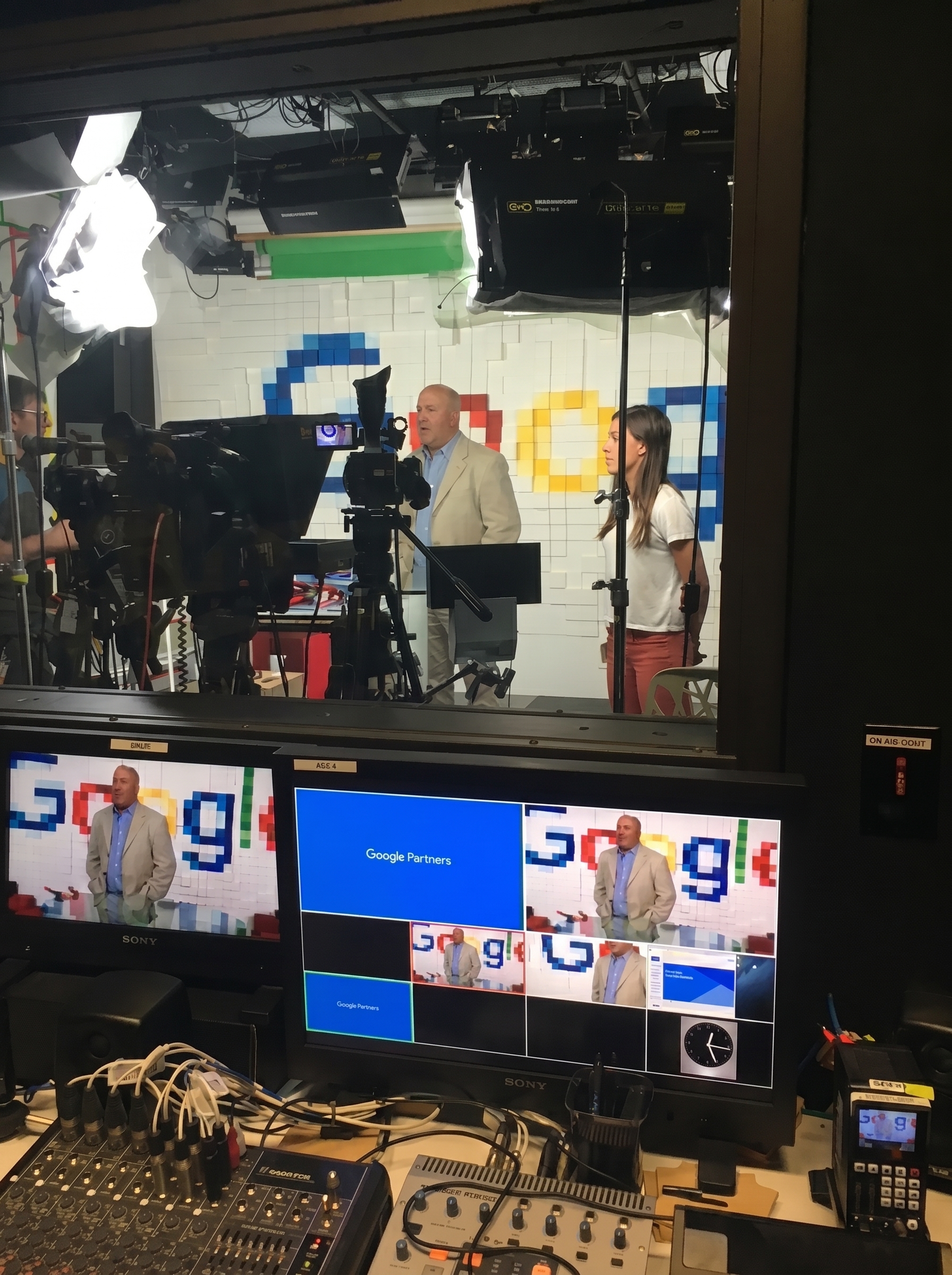
I've been building businesses for 38 years. Long enough to have made most of the mistakes myself, on my own money — which turns out to be the best marketing education there is. When you've signed the front of the checks, you read a marketing report very differently than the person who wrote it.
I started Digital Visibility Concepts in 2005, here in Gainesville. Before that I'd built one of the world's largest small-business SEO operations, and before that a boxing-and-kickboxing fitness program that went global — two very different businesses that taught me the same lesson: the numbers either work or they don't, and nobody gets to vote on it. Along the way my team and I have managed over a billion dollars in advertising spend, and I've spent enough time inside big-company marketing — including speaking at Google's headquarters — to know that world's budgets are enormous and its accountability, honestly, isn't.
Because here's what I kept seeing, on both sides of the table: marketing companies that got paid whether or not the client made money. The report was the product. Forty pages of charts, a login to a dashboard nobody opens, an account manager who changes every eight months — and somewhere on page 31, buried in the impressions and the rankings, the one question the owner actually had goes unanswered: is this making me money?
Marketing companies should be in the revenue business, not the reporting business.
That sentence has been the rule here since day one, and everything about how DVC runs falls out of it. It's why every engagement starts with a DVC strategist — trained on my standard — pulling your market's real numbers on a live call, where you can check them on your own screen — because if the math doesn't work, I'd rather we both find out in thirty free minutes than in month six. It's why every client gets a standing monthly meeting with me over one page of plain numbers that ends in dollars. And it's why, when a number stalls, it stays on the page in red until it's fixed — because hiding it would put us back in the reporting business.
It's also why there are no account managers here. Not because I haven't gotten around to hiring them — because the handoff is where accountability goes to die. The person who showed you the numbers and made you the promise should be the person sitting across from you every month. At DVC, that's me. My team does excellent work behind the scenes; the promise stays mine.
The clients this works for are owners like me — people who run local service companies, medical and wellness clinics, professional practices. People who answer their own phone, know what a customer is worth to them, and have usually been burned by at least one marketing company that talked a great game. If that's you, you'll recognize what we've built here in about ten minutes. And if you want to see how the whole thing runs, step by step, it's all laid out on How It Works — no mystery, start to finish.